











Decarbonisation
Decarbonisation has been identified as a critical focus area within the group’s sustainability journey. Given our presence across diverse sectors, from heavy industries like cement and aluminium to services and retail, our approach is tailored yet unified in ambition. Each business has developed detailed roadmap and is driving progress through energy efficiency, renewable energy, and value chain collaboration.

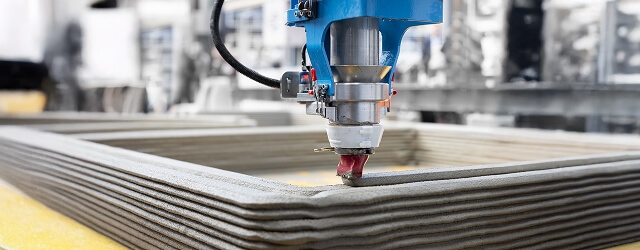
Our Decarbonisation Goals
At Aditya Birla Group, Net Zero by 2050 is a defined goal, driven by science-based pathways. Given our presence across varied sectors, we recognise that different strategies and pathways are necessary, yet all converge towards a common goal.

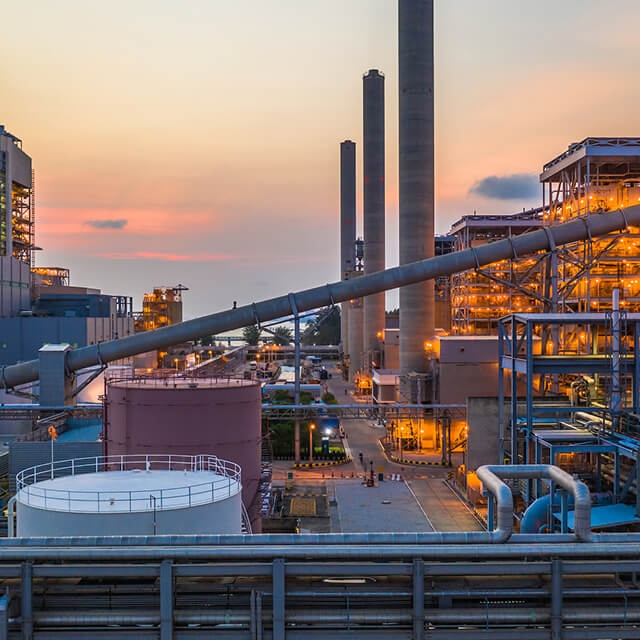
Our Approach
Our approach to decarbonisation is guided by a structured Decarbonisation Hierarchy, grounded in four core principles: Avoid, Minimise, Remove, and Offset. This hierarchy prioritises internal abatement, beginning with the elimination of emissions at the source before exploring the removal and offsetting of residual emissions. Offsets are used selectively and only when other options are not feasible.
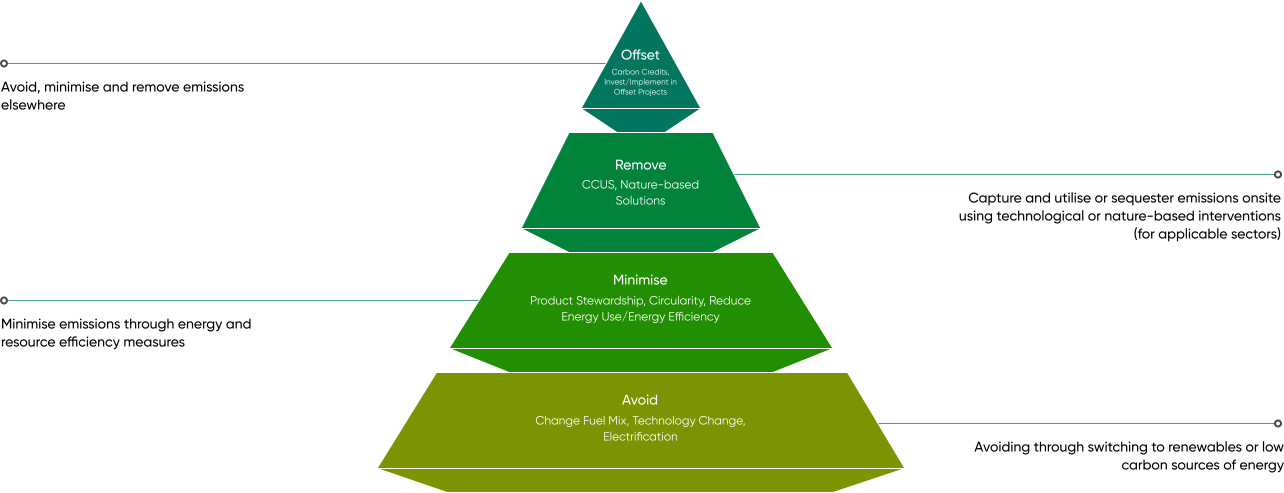
Decarbonisation Hierarchy
While the Group’s long-term ambition is clear, the diverse nature of our operations requires each business to develop comprehensive decarbonization roadmaps that outline short, medium, and long-term strategies to reduce emissions. This approach is underpinned by Group-level standards, governance mechanisms, and implementation support. While businesses own their roadmaps, strategic oversight is ensured through board-level reviews and dedicated working groups. Cross-functional teams at the site level ensure ground-level execution and data management.
Our Net Zero 2050 ambition is guided by the Avoid–Minimise–Remove–Offset framework. This ensures every step is focused, science-based, and contributes to long-term climate impact.
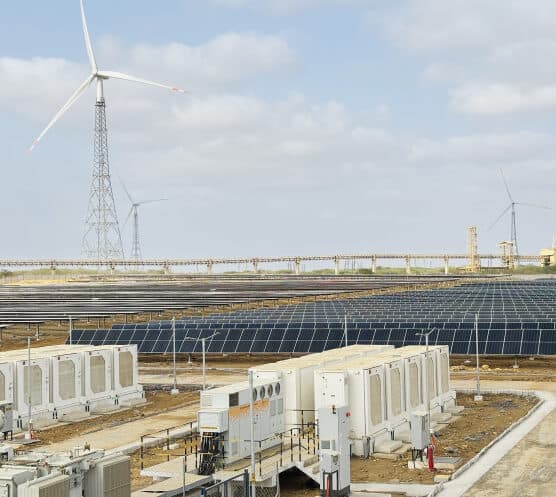
1. Avoid
We aim to eliminate emissions at source by shifting to clean energy and redesigning processes.
- UltraTech Cement: Over 1 GW of renewable energy installed, supported by WHRS, open access, PPAs, and RE + storage.
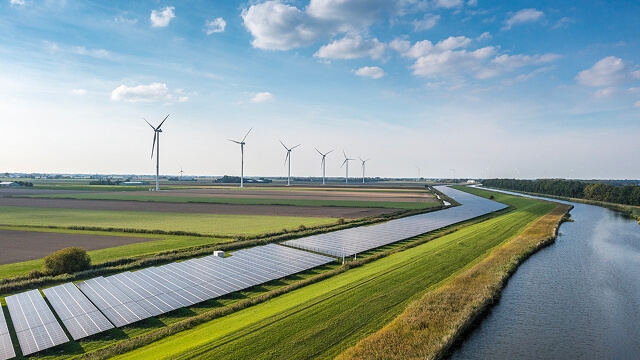
- Hindalco–Greenko Partnership: Developing 375–400 MW of solar and wind capacity, delivering 100 MW round-the-clock carbon-free power for aluminium smelting through hydro pump storage. This will cut 680,000 tonnes of CO₂ annually, a first-of-its-kind project in the global aluminium sector.
2. Minimise
We reduce emissions through efficiency and fuel transition.
- Hindalco: Pilots on biomass and green hydrogen to replace fossil fuels.
- UltraTech & Others: Waste heat and gas recovery systems, and Battery Energy Storage Systems (BESS) at cement plants.
3. Remove
We invest in technologies that capture and permanently remove carbon.
- UltraTech Cement: Industrial partner in a DST-backed Carbon Capture & Utilisation (CCU) test bed with IIT Madras and BITS Pilani to develop indigenous CO₂ capture technology for the cement sector.
4. Offset
For residual emissions, we invest in nature-based solutions (NBS) that deliver multiple co-benefits.
- Group businesses undertaking mangrove plantation and ecosystem restoration for carbon sequestration, biodiversity, and community resilience.
Scope 3 Emissions
Our businesses have been undertaking comprehensive Scope 3 inventories and are reporting across all material categories in line with global best practices. From a Group perspective, Category 1 (Purchased Goods & Services), Category 3 (Fuel- and Energy-Related Activities), Category 4 (Upstream Transportation & Distribution), and Category 9 (Downstream Transportation & Distribution) are the most material, together contributing to over 95% of our Scope 3 emissions (excluding Aditya Birla Capital).
On the reduction front, four of our businesses - ABFRL, Grasim Industries, Novelis, and Birla Carbon - have adopted Scope 3 emission reduction targets, as Scope 3 accounts for a significant share of their total Scope 1, 2, and 3 footprint. Other businesses, depending on materiality, are focusing on initiatives that drive measurable reductions, including:

Strengthening supply chain frameworks to integrate low-carbon practices

Advancing logistics decarbonisation through EVs, LNG trucks, and multimodal transport solutions

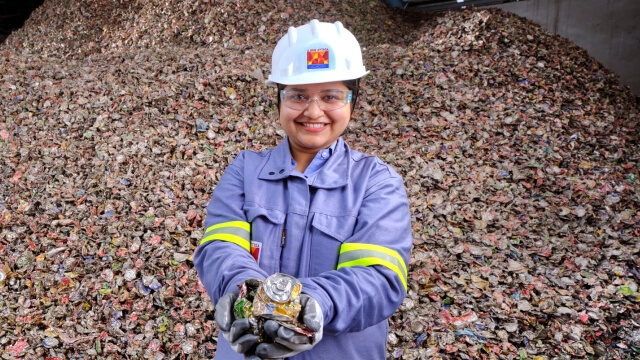
Sourcing recycled inputs such as aluminium, fibres, and construction waste
Through supplier engagement and collaboration across value chains, we are working to systematically reduce Scope 3 emissions and build long-term resilience in line with our Net Zero vision.