















Virtual Reality-Based Safety Training Initiative at UltraTech

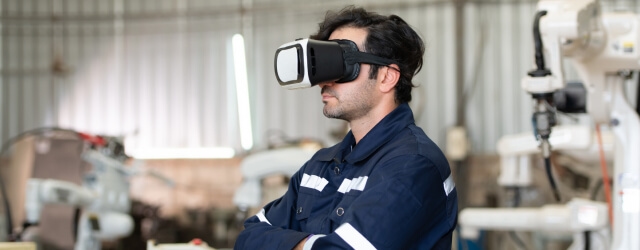
UltraTech, a leading cement manufacturer, has always prioritized worker safety, health, and well-being. With the goal of achieving "Zero Harm," UltraTech sought innovative solutions to enhance safety training effectiveness, particularly for contract workers unfamiliar with job-specific hazards. As part of its digital transformation, the company introduced Virtual Reality (VR)-enabled safety training to simulate high-risk activities and improve learning outcomes.
Problem Statement
Traditional safety training methods were insufficient in effectively educating contract workers about workplace hazards. The key challenges included:

Lack of awareness about job-specific hazards.

Ineffective engagement in conventional training programs.

Limited retention of safety protocols.

Inadequate hands-on experience in hazardous scenarios.
To address these gaps, UltraTech benchmarked VR training implementations.
Virtual Reality Training Approach
The VR-enabled safety training initiative was designed with the following features:
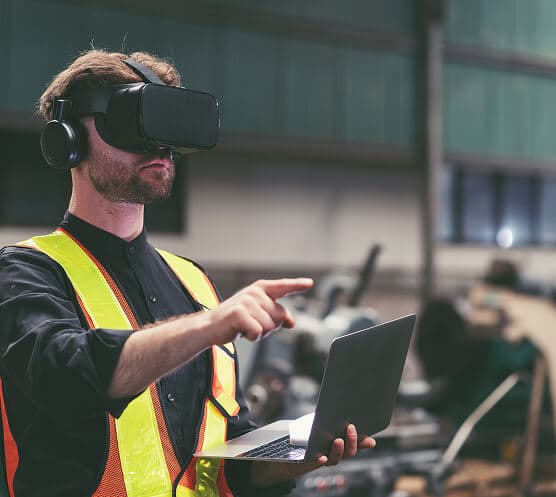
1. 3D Interactive Simulations
- Workers interact with an artificial 3D environment, experiencing real-life hazardous situations.
- They learn about risks, consequences, and the safest execution methods.
2. Short Vernacular Modules
- Each training module lasts 4-5 minutes, making learning concise, engaging, and easy to retain.
- The modules are available in multiple regional languages.
3. Hands-on Learning & Real-Time Actions
Instead of passive classroom sessions, workers perform virtual tasks, reinforcing safe practices.
4. Automated Evaluation & Performance Tracking
- The system generates automatic reports to assess worker understanding.
- Performance data helps track training effectiveness and areas for improvement.
Implementation Strategy
The initiative was systematically planned and executed with the following key steps:
1. Selection of High-Risk Activities
30 high-risk activities were identified across UltraTech operations, covering pre- and post-clinkerization processes.
2. Technology & Vendor Selection
A comprehensive vendor assessment was conducted to ensure high-quality VR module development.
3. Training Deployment & Monitoring
- March 1, 2023: 30 VR modules were officially rolled out across UltraTech.
- Weekly performance reviews were conducted to track progress.
- Training execution was carried out in phases, with initial focus on 14 modules.

Impact and Results
The VR-based training initiative yielded significant improvements in worker engagement, learning retention, and safety awareness.
Scale of Implementation :

33,000 workers identified for training.

85% worker coverage achieved for the first 14 modules.
Worker & Trainer Feedback
UltraTech's VR-based safety training initiative has successfully enhanced workforce safety awareness and reduced "at-risk behavior" by making learning interactive and engaging.
- Learning by doing significantly improved hazard identification and risk mitigation capabilities.
- Automated evaluation ensured real-time tracking and compliance.
- Short, vernacular-based modules facilitated easy understanding and retention for workers.
With continued scaling and development of new modules, UltraTech aims to achieve 100% VR-enabled training coverage and reinforce its commitment to Zero Harm in workplace safety.
Leveraging VR simulations to train workers for high-risk tasks, boosting safety awareness and minimizing hazards.
Key Takeaways & Conclusion
UltraTech's VR-based safety training initiative has successfully enhanced workforce safety awareness and reduced "at-risk behavior" by making learning interactive and engaging.
- Learning by doing significantly improved hazard identification and risk mitigation capabilities.
- Automated evaluation ensured real-time tracking and compliance.
- Short, vernacular-based modules facilitated easy understanding and retention for workers.
With continued scaling and development of new modules, UltraTech aims to achieve 100% VR-enabled training coverage and reinforce its commitment to Zero Harm in workplace safety.
Leveraging VR simulations to train workers for high-risk tasks, boosting safety awareness and minimizing hazards.